Lead Capture That Actually Converts: Typeform to HubSpot or Salesforce With Auto-Enrichment
1) Leads Don’t Die From Volume, They Die From Latency
Most teams leak leads because they respond too slowly, route them incorrectly, or lose context in handoffs. The fix is not “more SDRs.” It’s automation that turns every form submission into a complete, assigned, actionable record in your CRM, instantly.
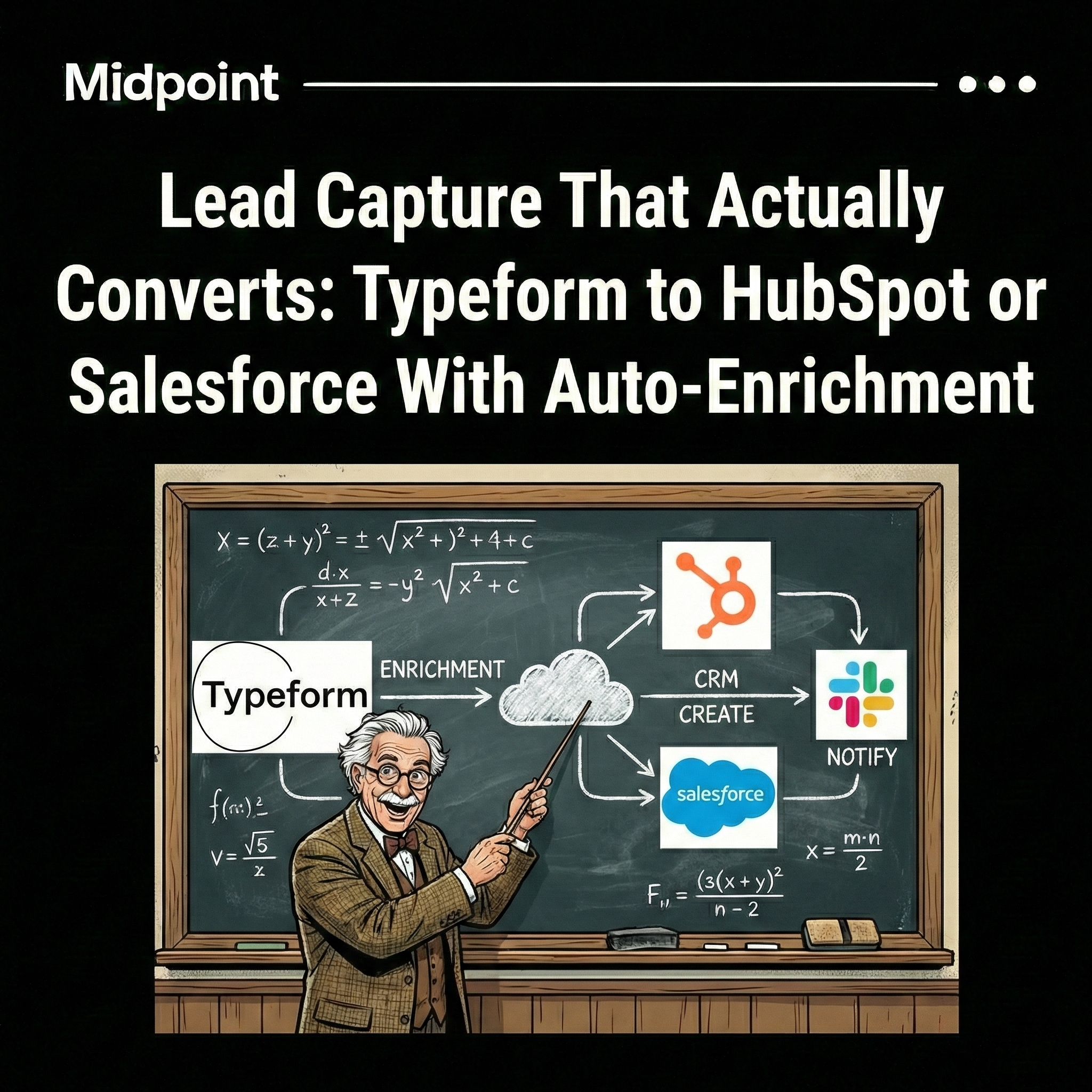
2) The Workflow: Typeform → Enrichment → CRM Create → Slack Notify
Midpoint triggers on Typeform submissions, enriches leads via HTTP Request to your enrichment provider, uses OpenAI (or other model routing) to classify intent, then creates or updates records in HubSpot or Salesforce. It assigns an owner based on rules and posts the summary into Slack or Teams so the team sees it where they work.
3) Route by Intent, Not by Guesswork
The advantage of AI workflows is not “AI everywhere.” It’s using AI only where it matters: classification and extraction. Midpoint can tag leads by persona, urgency, product interest, or company size, then route them to the right rep and attach next steps. This is how you turn lead capture automation into pipeline, not spreadsheet clutter.
4) Make It Reliable With Deduping and Audit Logs
Every CRM becomes a junkyard without dedupe. Midpoint can check existing records, normalize fields, and enforce canonical formatting so your pipeline stays clean. Every action is logged, every decision is traceable, and failures are alertable. That reliability makes automation trustworthy enough to depend on.
5) Extend Into Full RevOps: Follow-Up, Calendar, and Ads Attribution
Once the lead is created, Midpoint can schedule follow-ups, create tasks in Asana, ClickUp, or Monday.com, and write notes into Notion. You can connect attribution using Google Analytics, Google Ads, and Facebook Graph, then push that context into the CRM record. This is how you build an actual go-to-market operating system.
More articles

Automation Year in Review: The Shift to "Vibe Ops"
2025 has been a strong and eventful year for the practical application of LLMs. While model capabilities grew, the most interesting developments weren’t just about raw intelligence, but how we harness it to do actual work.

Where U.K. Businesses Are Really Seeing Value From AI
U.K. enterprises are getting real ROI from AI agents in high-volume workflows. Here’s how to scale means-to-outcomes with AI automation tools.
How to Build Midpoints: A Practical Guide to AI Automation With AI Agents
Learn how to build Midpoints end to end: define triggers, connect tools, use AI agents and LLMs, test, deploy, monitor, and ship fixes fast.