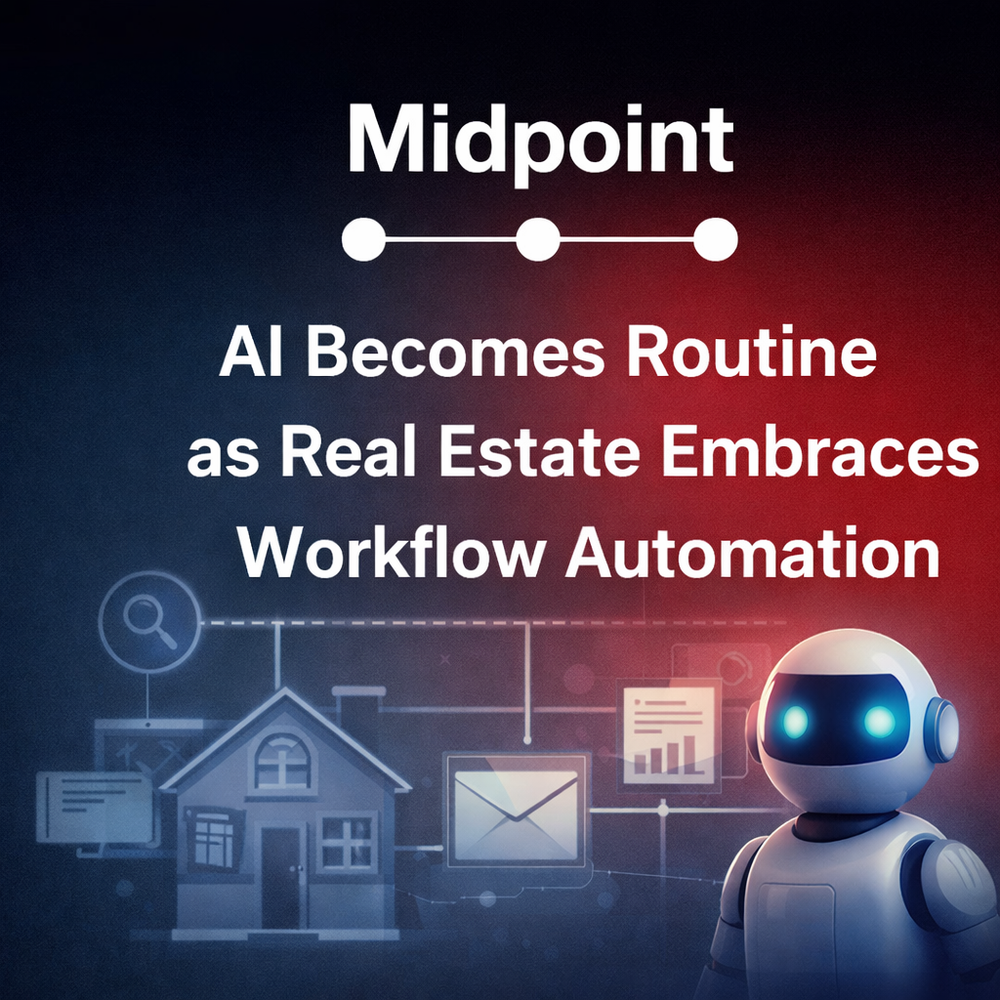
AI Becomes Routine as Real Estate Embraces Workflow Automation
1) Agents want less mental overload, not just more speed
The Zillow survey points to a simple shift: agents are choosing tools based on ease of use more than cost or efficiency. That makes sense. Most agents are juggling listings, follow-ups, transaction work, market research, and client communication across several systems. The real problem is not just time. It is the mental strain of bouncing between tools all day.
That is why AI is gaining traction. When it works well, it does not just save a few minutes. It reduces the amount of repetitive thinking and manual coordination agents have to do.
2) AI is becoming part of the daily workflow
Nearly half of agents now say they use AI tools like ChatGPT, Gemini, or Claude every day. That means AI is no longer just a novelty. For a large part of the market, it is becoming routine.
But using AI for one-off tasks is only the beginning. Drafting an email or summarizing a report helps, but it does not solve the bigger problem if the agent still has to manually move information between inboxes, CRMs, spreadsheets, and listing tools.
3) The bigger opportunity is workflow automation
This is where the market is heading. The real value is not just an AI chat window. It is AI built into the workflow.
That means things like enriching leads, routing them to the right owner, summarizing pipeline activity, drafting follow-ups with context, syncing data across systems, and flagging stalled deals automatically.
That is what Midpoint is built for. Midpoint describes itself as an AI computer with a full operating system and browser that can run work across tools from a single prompt. It can chat through Slack, Discord, Telegram, or the web, and it can browse the web, control software, and run end-to-end workflows across connected systems.
4) Real estate work is fragmented, and that is the real pain
The survey shows agents rely on multiple systems every week. That fragmentation is what creates friction. One tool has lead data, another has notes, another has market comps, another has communication history.
Midpoint is designed for that kind of environment. Its site makes clear that it works across apps, APIs, databases, browser actions, approvals, queues, and chat interfaces. In plain English, it is built to connect the tools and run the process, instead of making the user act as the glue.
5) The agents who use AI well will look sharper to clients
The biggest takeaway is that AI is not replacing the agent. It is helping the agent show up better.
If repetitive work gets automated, agents can respond faster, stay more organized, and spend more time on relationships, guidance, and closing deals. That is what clients actually care about.
AI becomes routine when it helps with real work. For real estate, that means reducing cognitive load and automating fragmented workflows. That is why this trend matters, and why a workflow platform like Midpoint fits it so well.
More articles
AI Agent Incident Communication Plan: Templates, Cadence, and Evidence
A practical AI agent incident communication plan with severity criteria, stakeholder templates, status cadence, evidence, and follow-up.

AI Agent Data Privacy Checklist: Controls That Hold Up in Production
A practical enterprise checklist for classifying agent data, minimizing access, controlling retention and transfers, redacting evidence, reviewing vendors, and proving incident readiness.

AI Agent Observability Tools Compared: A Practical Buyer Guide
Compare eight AI agent observability approaches by traces, tool calls, evaluations, cost, privacy, alerts, deployment, and OpenTelemetry support.