Stop Using Vulnerable Agent Software. Use Midpoint Instead.
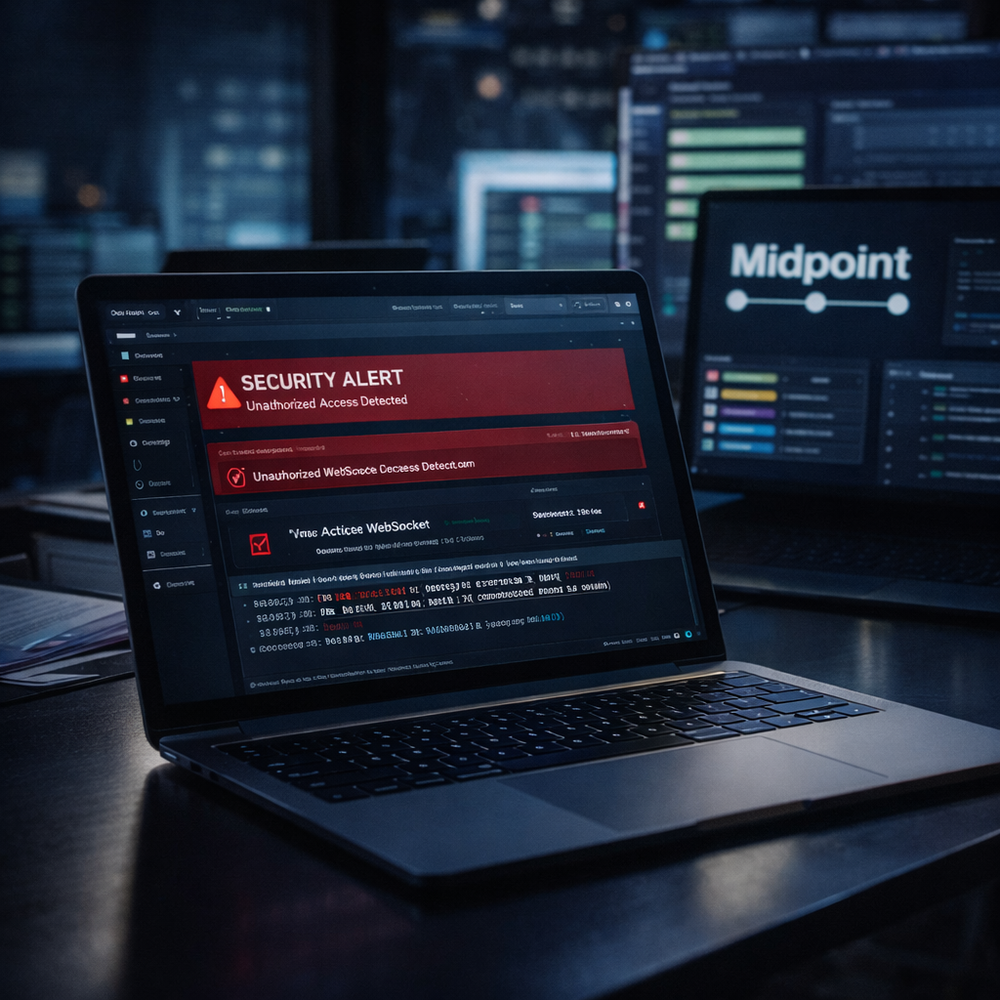
1) If a website can hijack your agent, that is not a safe operating model
The OpenClaw issue is not just another security bug. It is a warning sign about the whole model.
According to the write-up, a malicious website could silently connect to a locally running OpenClaw gateway, brute-force the password, register as a trusted device, and take over the agent with admin-level access. No plugin. No extension. No obvious warning to the user.
That means visiting the wrong website could give an attacker control over software that already has access to your files, tools, messages, and system actions.
That is not just a patching problem. That is a broken trust model.
For a practical threat model covering credentials, least privilege, prompt injection, session isolation, approvals, audit logs, and kill switches, use the Browser Automation Security Checklist.
2) Self-hosted agents create way too much blast radius
OpenClaw became popular because it gives developers a powerful local AI agent that can connect to calendars, messaging apps, development tools, and local filesystems.
That is also exactly what makes it dangerous.
When you run a self-hosted agent with broad permissions, every weakness matters more. A bug is no longer just a bug. It becomes a path into the rest of your environment.
If the agent can read files, search Slack, touch credentials, or run shell commands, then compromising the agent can look a lot like compromising the machine.
That is why businesses should stop treating self-hosted agent software like a harmless productivity tool. It is closer to privileged infrastructure.
3) The real problem is that most teams do not want to be security operators
The article says OpenClaw patched the issue quickly, which is good. But that does not change the bigger problem.
If you use self-hosted software like this, you are responsible for:
- patching every machine
- finding shadow installations
- reviewing permissions
- rotating keys
- auditing connected nodes
- monitoring for misuse
- deciding how much access the agent should have in the first place
Most teams do not actually want that burden. They do not want to become full-time operators of risky local agent runtimes.
They just want the workflow to work.
4) Midpoint is the better alternative because it is built for the workflow, not the DIY security mess
This is where Midpoint is different.
Midpoint is not asking teams to spin up a powerful local agent on employee laptops and hope the controls hold. Midpoint is built to run workflows across tools in a structured way.
On midpoint.ai, Midpoint is positioned as an AI computer with a full operating system and browser that can work across your stack, control tools, browse the web, analyze spreadsheets, and run tasks end to end from chat. It connects to apps, APIs, databases, and browser environments, and it is designed around real workflows, not just open-ended local agent behavior.
That distinction matters.
The point is not to give every employee a semi-autonomous self-hosted runtime with deep workstation access. The point is to automate business work safely, reliably, and in a controlled system.
5) Stop using vulnerable agent software for serious work
If you are experimenting on a throwaway machine, that is one thing.
But if the work touches revenue, operations, client data, reporting, approvals, or internal systems, using fragile self-hosted agent software is the wrong bet.
The OpenClaw story is a reminder that local agent power comes with real security consequences. A tool that can be hijacked from a browser tab is not something most businesses should trust at the center of operations.
Midpoint is the better alternative because it is built for real workflow automation across systems, without asking customers to own the full security and maintenance mess of self-hosted agent infrastructure.
More articles
AI Agent Incident Communication Plan: Templates, Cadence, and Evidence
A practical AI agent incident communication plan with severity criteria, stakeholder templates, status cadence, evidence, and follow-up.

AI Agent Data Privacy Checklist: Controls That Hold Up in Production
A practical enterprise checklist for classifying agent data, minimizing access, controlling retention and transfers, redacting evidence, reviewing vendors, and proving incident readiness.

AI Agent Observability Tools Compared: A Practical Buyer Guide
Compare eight AI agent observability approaches by traces, tool calls, evaluations, cost, privacy, alerts, deployment, and OpenTelemetry support.