The 10-Minute Automation Audit: Find the Work You Shouldn’t Be Doing
1) The Real Cost Is Hidden in Hand-Offs
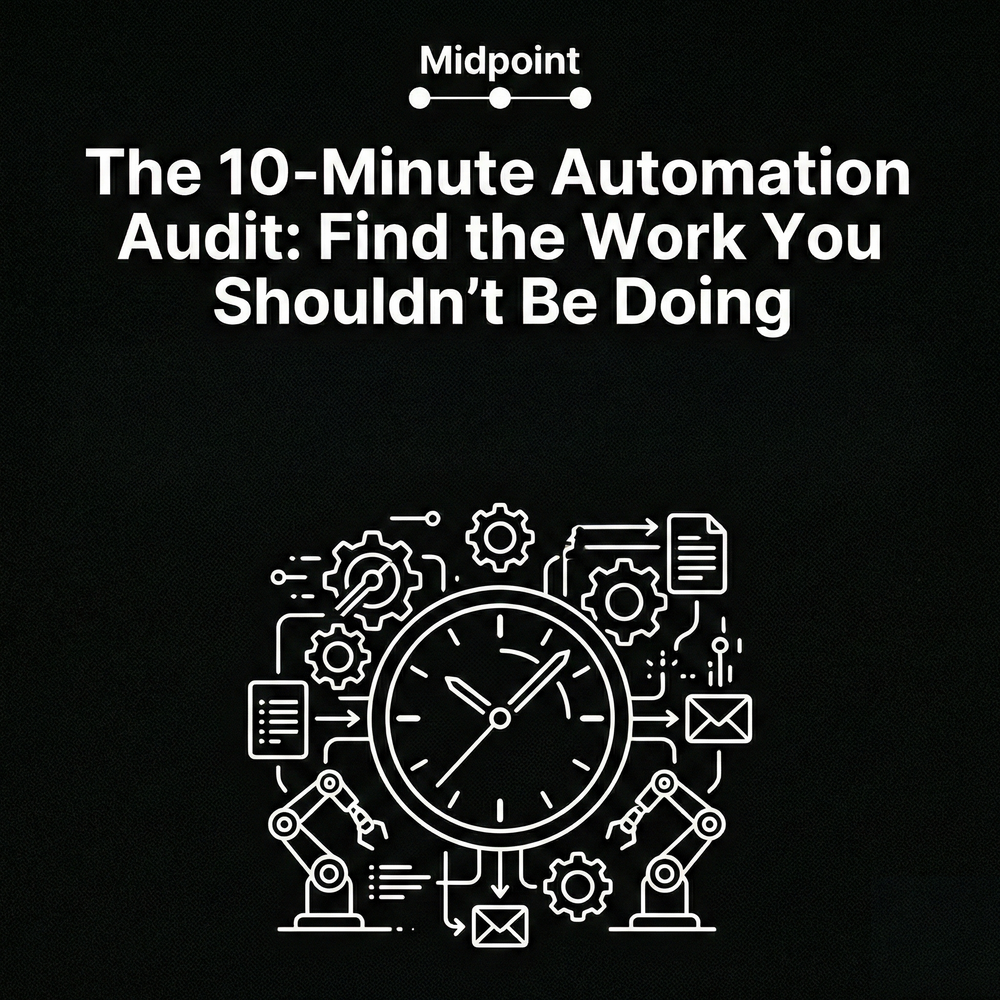
Manual work rarely looks like “busywork” on a calendar. It looks like forwarding emails, copying fields, checking statuses, chasing approvals, and reconciling mismatched systems. Those hand-offs are the work, and they compound as your stack grows. The audit starts by treating every hand-off as a candidate workflow.
For candidates that survive the audit, build a finance-ready case with the AI workflow automation ROI calculator, including implementation, maintenance, error costs, sensitivity ranges, payback, and a do-not-automate threshold.
For concrete process patterns after the audit, see AI workflow automation examples for operations teams.
For concrete process patterns after the audit, see AI workflow automation examples for operations teams.
For concrete process patterns after the audit, see AI workflow automation examples for operations teams.
2) Track Inputs, Not Tasks
Most teams inventory tasks. Better teams inventory inputs. Where does work arrive, email, forms, tickets, payments, CRM updates, API events. If you can name the trigger, you can automate the start of the process and reduce latency instantly.
3) Define Outputs Where Work Actually Happens
Automation fails when it produces outputs nobody sees. The best workflows route outputs into the systems teams already live in, CRM records, docs, sheets, chat channels, databases. Define what “done” looks like in the system of record, and route summaries to the collaboration channel.
4) Add Guardrails Early
If the workflow touches money, customers, or compliance, it needs approvals, exception handling, and audit logs. Build two lanes, the happy path that runs automatically, and the exceptions lane that escalates uncertainty. Monitoring and alerts are how you prevent silent failures.
5) Start With One Workflow That Repeats Daily
Pick a workflow with volume and messy inputs, sales inbox triage, invoice intake, support routing, daily reconciliation. Ship it end to end, then iterate. The compounding effect comes from reliability. When a candidate survives the audit, record it in the AI workflow intake form template before any implementation work starts.
More articles
AI Agent Incident Communication Plan: Templates, Cadence, and Evidence
A practical AI agent incident communication plan with severity criteria, stakeholder templates, status cadence, evidence, and follow-up.

AI Agent Data Privacy Checklist: Controls That Hold Up in Production
A practical enterprise checklist for classifying agent data, minimizing access, controlling retention and transfers, redacting evidence, reviewing vendors, and proving incident readiness.

AI Agent Observability Tools Compared: A Practical Buyer Guide
Compare eight AI agent observability approaches by traces, tool calls, evaluations, cost, privacy, alerts, deployment, and OpenTelemetry support.