The New Automation Stack: Triggers, Agents, and an Ops Reliability Layer
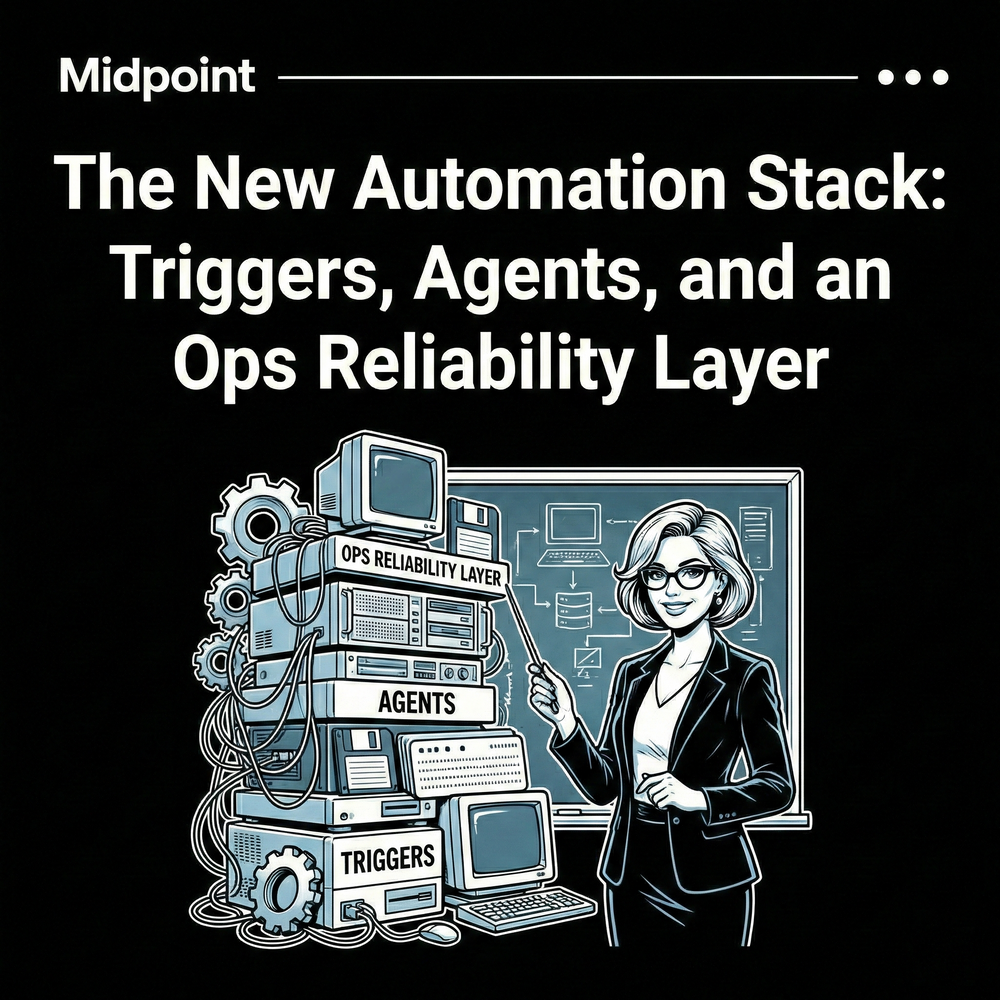
1) Automation Without Reliability Is Just Faster Failure
Teams build workflows, then wonder why they revert to manual work. It’s because failures are silent and ownership is unclear.
2) Triggers Start the Work, Agents Add Intelligence
Use deterministic logic for routing and rules, use AI for classification, extraction, summarization, translation. That division keeps costs down and accuracy high.
3) Outputs Must Land Where Teams Operate
If results don’t appear in CRMs, docs, sheets, chat, and databases, you haven’t changed execution. You’ve created another inbox.
4) The Reliability Layer Is Monitoring, Alerts, Audit Logs
You need observability and recovery from day one. Retries, approvals, and audit trails make automation trustworthy.
5) The Stack Compounds When Workflows Are Reusable
The real unlock is reusable templates and patterns, because each new workflow gets cheaper to ship than the last.
More articles
AI Agent Incident Communication Plan: Templates, Cadence, and Evidence
A practical AI agent incident communication plan with severity criteria, stakeholder templates, status cadence, evidence, and follow-up.

AI Agent Data Privacy Checklist: Controls That Hold Up in Production
A practical enterprise checklist for classifying agent data, minimizing access, controlling retention and transfers, redacting evidence, reviewing vendors, and proving incident readiness.

AI Agent Observability Tools Compared: A Practical Buyer Guide
Compare eight AI agent observability approaches by traces, tool calls, evaluations, cost, privacy, alerts, deployment, and OpenTelemetry support.