Why Use an Agent Builder Now
1) Work Has Become a Routing Problem
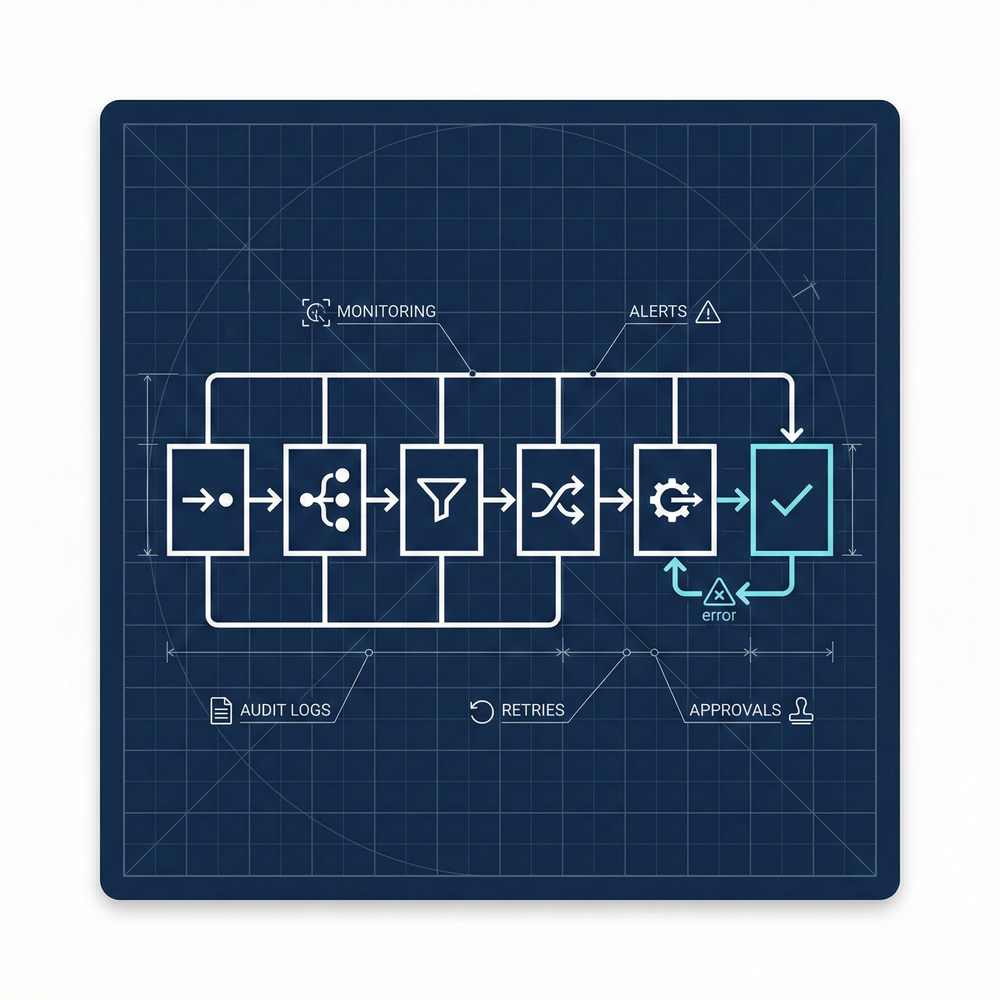
Most modern teams are not blocked by strategy, they are blocked by handoffs. Requests arrive through email, forms, Slack messages, meetings, and tickets, then bounce between tools until someone finally executes. That friction is not a people problem, it is a workflow orchestration problem. An agent builder matters now because it turns scattered inputs into a consistent system: ingest, classify, extract, route, execute, confirm. When that loop is automated, the manual work stops being the glue that holds operations together.
2) Hiring Can’t Keep Up With Execution Demand
In many organizations, the default response to workload is hiring. But every new hire introduces more coordination overhead: more status checks, more approvals, more “who owns this?” moments. Automated teams scale differently. They invest in workflow automation that runs across integrations so output grows without multiplying complexity. The result is compounding speed. An agent builder is how you turn that strategy into reality, because it gives your team a repeatable way to ship AI workflows and AI agents that do real work while people focus on decisions.
3) Agents Only Matter When They Can Actually Do Things
The reason “AI agents” are having a moment is simple: it is easier to ask for an outcome than to click through five systems. But an agent that only chats is not a solution. A real agent must connect to your stack, use APIs and webhooks, pass variables at runtime, and write outputs into CRMs, docs, databases, and chat. It must handle conditional logic and approvals for sensitive actions. This is why agent builders are becoming an operating layer: they make it feasible to automate business processes end to end, not just generate text.
4) Production Readiness Is the Differentiator
Most teams have tried automation and still feel behind because reliability was never designed in. In production, things change: auth expires, fields get renamed, APIs rate-limit, and edge cases appear. Without monitoring and observability, agents fail silently. Without alerts and notifications, failures become expensive surprises. Without audit logs and clear ownership, nobody can troubleshoot quickly. A serious agent builder includes error handling, retries and recovery, and practical governance like role-based permissions and access controls. Reliability is not a nice-to-have, it is what makes agents worth trusting.
5) Midpoint Makes Agent Adoption Practical
Midpoint is built around a clear promise: from prompt to running workflow. You describe what you want in natural language, Midpoint asks clarifying questions, wires the integrations across apps, APIs, and databases, builds the multi-step workflows, tests end to end, and keeps them running. The Dashboard shows executions in real time, with observability, alerts, and audit trails, plus the ability to ship fixes instantly when execution hits issues. That is why using an agent builder now is not about chasing hype. It is about building a reliable operating system for work, one workflow at a time.
More articles
AI Agent Incident Communication Plan: Templates, Cadence, and Evidence
A practical AI agent incident communication plan with severity criteria, stakeholder templates, status cadence, evidence, and follow-up.

AI Agent Data Privacy Checklist: Controls That Hold Up in Production
A practical enterprise checklist for classifying agent data, minimizing access, controlling retention and transfers, redacting evidence, reviewing vendors, and proving incident readiness.

AI Agent Observability Tools Compared: A Practical Buyer Guide
Compare eight AI agent observability approaches by traces, tool calls, evaluations, cost, privacy, alerts, deployment, and OpenTelemetry support.