Sales Inbox to CRM: The Agent That Turns Emails Into Next Steps Automatically
1) The Sales Inbox Is the Real CRM
Sales teams live in email. CRMs are where data goes to die unless someone is forced to update them. Midpoint flips the default: instead of asking reps to do admin work, an agent updates the CRM as a byproduct of real communication.
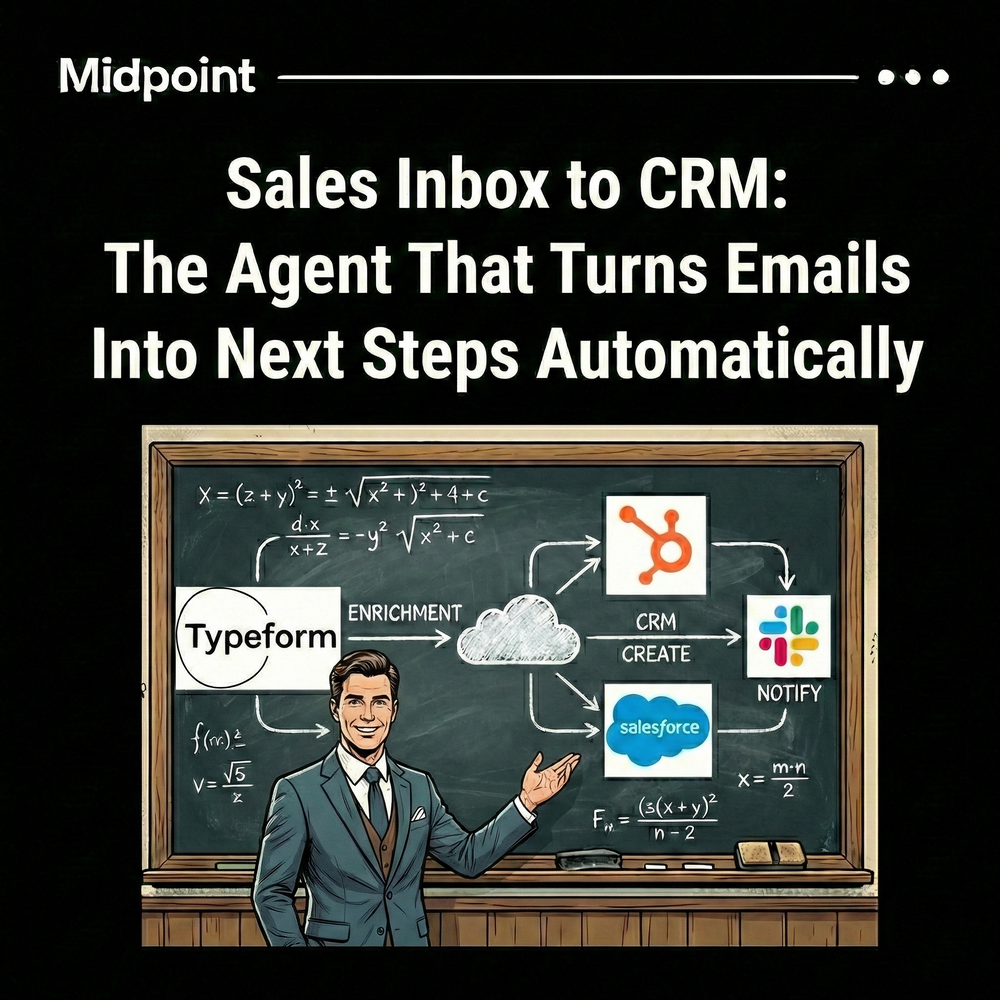
2) The Workflow: Gmail/Outlook → Intent Classification → CRM Update
Midpoint triggers on inbound Gmail or Outlook sales emails, uses OpenAI/Anthropic/Gemini to classify intent (pricing request, objection, scheduling, contract, churn risk), then updates the matching deal in HubSpot or Salesforce. It posts a “next steps” summary into Slack and optionally logs a clean record to Notion or Google Docs.
3) Accuracy Comes From Structure, Not Magic
A useful sales agent needs boundaries. Midpoint can require confirmations for high-risk actions, maintain canonical fields, and apply deterministic rules for deal stage changes. AI is used for summarization and classification, while the workflow logic enforces safety. That is how you avoid “helpful hallucinations” entering the system of record.
For deals already in the CRM, review stale CRM deals as a separate read-only job. Compare fields with associated activity and ask the owner to confirm the correction before changing the record.
4) Reliability: Monitor It Like You’d Monitor Revenue
If your sales workflow breaks quietly, pipeline hygiene collapses. Midpoint provides visibility into executions, failures, retries, and recovery. If authentication fails or an API rejects an update, you get alerts, not surprises. That’s what makes this workflow usable by real teams.
5) Expand Into Coaching and Ops Briefings
Once emails are structured, you can extend into rep coaching summaries, weekly pipeline briefings to Google Docs, and dashboards that track deal risk. Combine Slack outputs with scheduled summaries and you’ve replaced a chunk of RevOps busywork with an always-on system.
More articles
AI Agent Incident Communication Plan: Templates, Cadence, and Evidence
A practical AI agent incident communication plan with severity criteria, stakeholder templates, status cadence, evidence, and follow-up.

AI Agent Data Privacy Checklist: Controls That Hold Up in Production
A practical enterprise checklist for classifying agent data, minimizing access, controlling retention and transfers, redacting evidence, reviewing vendors, and proving incident readiness.

AI Agent Observability Tools Compared: A Practical Buyer Guide
Compare eight AI agent observability approaches by traces, tool calls, evaluations, cost, privacy, alerts, deployment, and OpenTelemetry support.