Weekly Pipeline and Ops Briefing: The Executive Update That Runs Itself
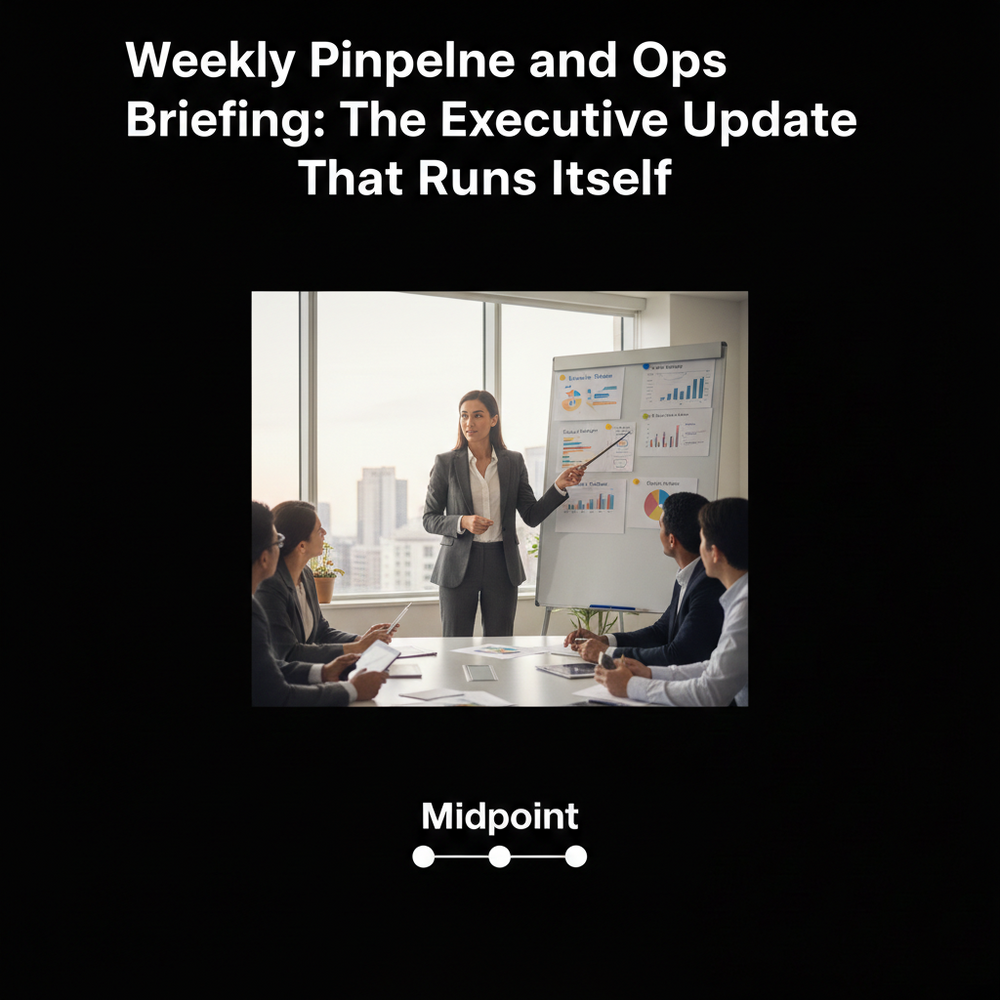
1) Executives Don’t Need More Reports, They Need Decisions
Weekly briefings often become a ritual of scrambling, screenshots, and last-minute status updates. The problem is not reporting. It’s that data is scattered and summarization is manual. Midpoint converts the briefing into a scheduled workflow that produces decision-ready outputs.
2) The Workflow: CRM Changes → Risk Summary → Google Doc → Slack Post
Midpoint pulls pipeline and deal changes from HubSpot, Salesforce, or Microsoft Dynamics CRM, summarizes risks and actions using OpenAI/Anthropic/Gemini, generates a structured briefing in Google Docs, and posts a clean summary into Slack or Teams. The workflow becomes a single source of truth, on time, every week.
3) Make the Briefing Useful: Risks, Not Vanity Metrics
The best briefings answer: what changed, what is at risk, what needs action, and who owns it. Midpoint can highlight stalled deals, stage regression, missing next steps, and churn risk signals from email or notes. You’re not shipping a report, you’re shipping an operating instrument.
When a briefing flags a stale close date or missing next step, the next job is a checked CRM cleanup queue: the source behind each finding, a proposed correction and a decision for the deal owner.
4) Reliability and Auditability Build Trust
If leadership is going to depend on a workflow, it must be reliable. Midpoint logs every run, flags failures, and supports retries and recovery. You can also route exceptions, like “CRM unavailable,” into Slack alerts. Trust comes from repeatability, not from perfection.
5) Extend Into a Full Operating Rhythm
Once the doc exists, Midpoint can auto-create follow-up tasks in Asana, ClickUp, or Monday.com, schedule reviews using Google Calendar or Calendly, and archive artifacts to Google Drive or SharePoint. This is what an operating system for work looks like.
More articles
AI Agent Incident Communication Plan: Templates, Cadence, and Evidence
A practical AI agent incident communication plan with severity criteria, stakeholder templates, status cadence, evidence, and follow-up.

AI Agent Data Privacy Checklist: Controls That Hold Up in Production
A practical enterprise checklist for classifying agent data, minimizing access, controlling retention and transfers, redacting evidence, reviewing vendors, and proving incident readiness.

AI Agent Observability Tools Compared: A Practical Buyer Guide
Compare eight AI agent observability approaches by traces, tool calls, evaluations, cost, privacy, alerts, deployment, and OpenTelemetry support.